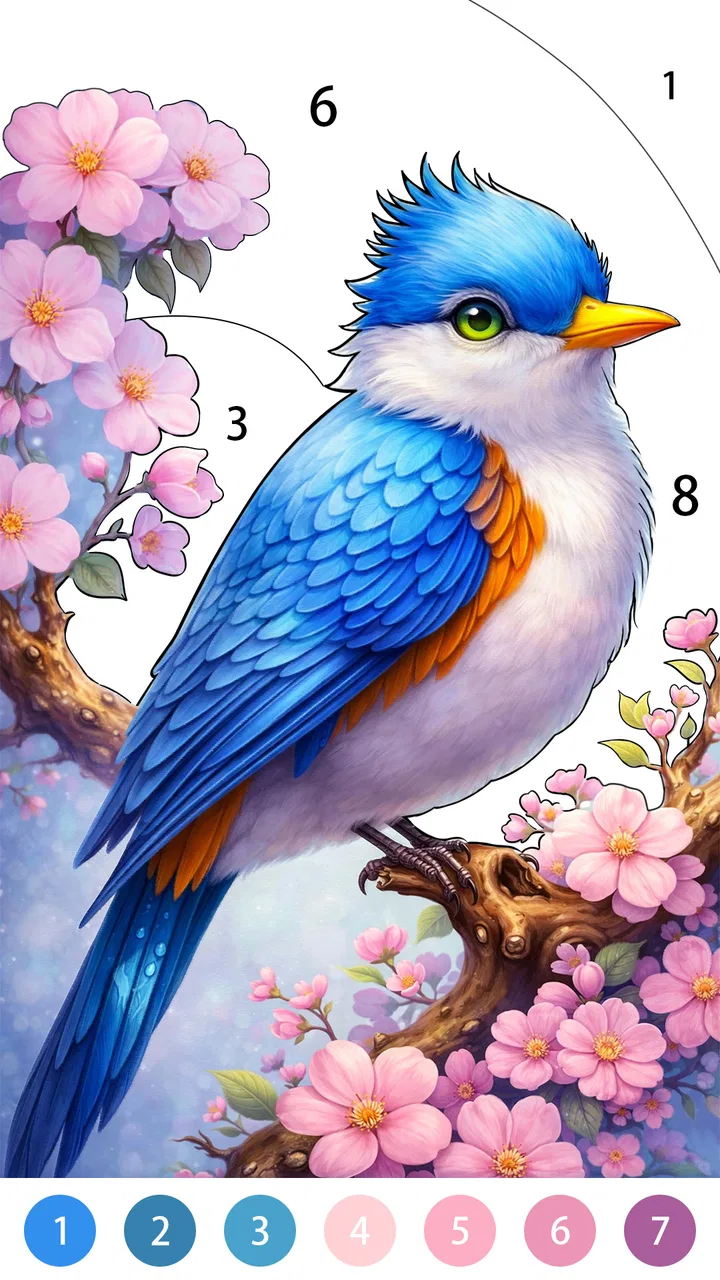
Blossom Color: Floral Serenity
- 4.8
- Rating
- 1.00M
- Installs
- Free
- Price

 Analysis by App-foxy
I approached Blossom Color: Floral Serenity expecting a simple board game built around color and flowers, and that is exactly where its appeal begins. It is easy to understand within moments, gentle enough for a short break, and focused enough that I never feel buried under complicated rules. The game comes from Fancy Games Studio and is free to start, with optional in-app purchases priced from $1.99 to $59.99 per item. That combination makes it approachable, although it also means I pay more attention to how I play than I would with a completely offline, one-time purchase.
What kept me returning was not a dramatic story or a competitive ranking system. It was the small satisfaction of arranging colors, spotting a cleaner move, and watching a board become more orderly. The floral presentation gives the familiar matching format a calmer personality, while the board-game structure makes each session feel like a compact puzzle rather than an endless stream of action. If you want a quiet game for waiting rooms, commutes, or a few minutes before bed, this is a natural fit. If you need deep strategy, social play, or a fast challenge, its relaxed design may feel too limited.
How I settled into the basic board routine
My usual session starts with a quick scan rather than an immediate tap. I look across the whole board, identify the most obvious color relationships, and then decide whether a move will open space or merely make the current arrangement look nicer. That small pause matters. In a game centered on color placement, the first available match is not always the most useful one, and playing too quickly can leave the remaining pieces awkwardly arranged.
You May Also Like

 Blood Strike: 2.5 Anniversary
Blood Strike’s Loadouts Turn Every Drop Into a Tactical Gamble
A close look at Blood Strike’s custom loadouts: how fast access to signature weapons reshapes its battle royale rhythm, rewards preparation, and narrows the gap between fights.

 Pandora - Music & Podcasts
Pandora’s Music Is Easy to Start, but Harder to Recover
Pandora’s strength is its low-effort path from a seed to a station. Its weak spot is how much confidence it asks you to place in connection, setup, and quiet recovery.

 8 Ball Pool
 Is Built on Rivalries, Rematches, and Routine
A close look at the rivalries, rematches, shared routines, and unanswered safety questions that turn a quick pool match into a persistent mobile community.

 Samsung Music
’s Quiet Strength Is Playing What You Already Own
Its reach comes less from spectacle than from dependable access to a personal library. That simplicity is both the app’s strongest retention engine and its ceiling.

 AccuWeather: Weather Radar
AccuWeather Review: A Quick, Clear Forecast for Everyday Decisions
For everyday plans, the best forecast is the one you can understand quickly. AccuWeather makes rain timing, radar, and local conditions easy to act on, with a few trade-offs.

 Hill Climb Racing
Why Hill Climb Racing Still Turns Crashes Into One More Run
A tiny car, a bumpy hill and one more upgrade: Hill Climb Racing keeps resurfacing because its simple chaos makes every near-miss feel personal.
More From Our News Desk



The core loop is friendly to casual players because it does not require a long explanation. I can pick it up after several days away and remember what I am doing immediately. That makes it different from heavier board games that punish a break in concentration. Here, the mental demand comes from seeing patterns and choosing an order, not from memorizing a large rulebook.
I also found that the floral theme changes the mood of the familiar format. The colors and blossoms make the board feel decorative, but the visual style is not merely background decoration. It encourages me to slow down and inspect the arrangement. That is useful when I want a relaxing activity, though players who prefer stark symbols and maximum visual clarity may find the presentation less direct than a plain geometric puzzle.
A realistic use case is a ten-minute pause between tasks. I can play one short stretch, put the phone away, and return to work without feeling that I have started an unfinished competitive match. The game is also suitable for winding down because the basic rhythm is much less demanding than an action title. I would still avoid assuming that every session will be equally calm: a difficult board or a poor sequence can create mild frustration, especially when I know a better move was available a few turns earlier.
One habit improved my results more than trying to play faster. I began protecting the colors that were hardest to place instead of clearing the easiest groups first. When several moves look acceptable, I consider which one preserves future options. This is a modest form of planning, but it turns the game from simple decoration into a more thoughtful board puzzle.
A practical routine for short sessions
For a quick round, I use a three-step rhythm. First, I inspect the corners and edges, where pieces can be easier to overlook. Next, I search for a move that creates two possible follow-ups rather than one immediate result. Finally, I check whether the move leaves a color isolated. This routine does not require special knowledge, and it helps prevent the most common casual mistake: spending the useful space too early.
I would not describe this as a game that demands perfect concentration. That is one of its strengths. I can play while taking a break without needing headphones, a long uninterrupted block of time, or a friend online. At the same time, the relaxed tone should not be confused with unlimited forgiveness. Careless choices still have consequences, and the board can become less flexible when I treat every match as equally valuable.
The game is rated Teen, so parents should check whether its tone and purchase model suit the person using the device. The age label does not change the simple nature of the board, but it is still worth considering when choosing a game for a younger player. For adults and older teenagers, the presentation feels accessible rather than childish, which helps the floral theme avoid becoming overly sugary.
Settings and purchase choices I would check first
Before settling into regular play, I recommend looking through the available in-game settings rather than accepting the default setup automatically. In a color-focused game, sound, visual comfort, notification behavior, and any display-related choices can affect whether a session feels soothing or distracting. I do not treat settings as an afterthought; they are part of making a short puzzle fit the way I actually use my phone.
I especially prefer to reduce interruptions when I am using the game as a quiet break. A board that invites concentration works best when the phone is not constantly pulling attention elsewhere. I also check whether the visual presentation is comfortable at the brightness level I normally use. Floral colors can look attractive, but strong contrast or a bright screen is not ideal for every evening session.
The free entry point is helpful because I can understand the basic experience before spending anything. The optional purchase range is broad, however, so I would advise setting a personal limit before exploring extras. I never assume that a purchase will improve my decision-making. In this kind of game, better planning is more valuable than buying my way past a moment of hesitation. Anyone who dislikes recurring purchase prompts should be particularly attentive during the first few sessions.
Another useful setting habit is to decide when I want to play rather than opening the game whenever I am bored. A planned five-minute session keeps the experience relaxing. An unplanned session can become longer simply because the next board feels close to completion. That is not unique to this title, but the gentle presentation makes it easy to underestimate how much time has passed.
The game runs on Android from version 7.0 onward, which covers a wide range of devices. I would still judge the experience by the phone in hand: a smaller screen may make color distinctions and board spacing less comfortable, while a larger display gives the arrangement more breathing room. The current version is 1.70.152, so keeping the installation current is sensible when an update is available, particularly for general compatibility and stability.
How I look for faster patterns without rushing
Experienced play here is less about frantic tapping and more about recognizing repeatable board situations. I look for colors that can be connected without blocking a larger opportunity, then compare that move with the option of opening a new area. The best choice is often the one that keeps several routes available, not the one that produces the most immediately satisfying visual change.
One pattern I watch for is a nearly completed area that can be finished in more than one order. I avoid closing it too soon if doing so would trap a less flexible color elsewhere. This is a useful trade-off: immediate progress feels good, but preserving space can create a stronger position a few moves later. The game rewards patience in small ways rather than announcing a complex strategy system.
I also use a “look ahead by one move” rule. After selecting a possible match, I imagine the board after that move and ask what I would do next. If the answer is obvious and leaves room for another choice, the move is usually safer. If it creates a dead-looking corner or isolates a color, I reconsider. This method is simple enough for new players and still useful once the basic loop becomes familiar.
When I am tired, I deliberately switch to a slower style. I focus on avoiding mistakes instead of chasing the most elegant arrangement. That makes the game work well as a low-pressure pastime, but it also exposes one of its limitations: players wanting a strong sense of progression may find the satisfaction mostly moment to moment. The pleasure comes from solving the board in front of me, not necessarily from building a character, collecting a large story, or competing with a community.
For that reason, I would choose this over a traditional board-game app when I want a solo, visually gentle puzzle with minimal setup. I would choose a more conventional digital board game when I want opponents, detailed rules, or meaningful long-term tactics. I would also choose a pure color-matching game if I wanted rapid reactions and constant effects. Blossom Color sits between those alternatives: calmer than an arcade match-three game, but lighter and more immediate than a full strategy board game.
Where the relaxed design reaches its limits
The same simplicity that makes the game welcoming can make it feel repetitive for players who need variety in every session. I can enjoy the board-by-board rhythm, but I would not recommend it as the only game on a device for someone who quickly tires of familiar patterns. Its appeal depends on appreciating small improvements in observation and sequence rather than expecting a large new system around every corner.
The color-centered design may also be a consideration for players who have difficulty distinguishing similar shades. Clear attention to the board helps, but color remains central to the experience. I would test the opening play carefully and decide whether the visual information is comfortable before committing to regular sessions. This is an important practical point that a short store description cannot answer for every player.
There is also a difference between relaxing and mindless. Some boards allow a casual approach, while others make poor ordering more noticeable. I like that tension in moderation, yet it means the title is not always ideal when I want something I can play without looking closely. For a podcast-listening game or a completely passive distraction, a simpler idle experience may be a better match.
The free price lowers the barrier to trying it, but optional purchases can change how different players experience the game. I recommend treating the purchase screen as a choice, not as part of the basic promise of relaxation. If you are comfortable enjoying the core loop without buying anything, the free starting point is attractive. If you prefer games with no paid items at all, this is not the cleanest option in the board category.
Fancy Games Studio has built a focused experience rather than an all-purpose board platform. That focus is useful when I want flowers, color, and a self-contained puzzle routine. It is less convincing when I want multiplayer interaction, a campaign, or a deep collection of distinct board games in one app. Knowing that boundary prevents disappointment and makes the recommendation more honest.
What mastery looks like in this particular game
After spending time with it, I think mastery means becoming consistent rather than becoming fast. I try to read the board before acting, preserve difficult colors, and avoid moves that make the next decision narrower. I also accept that an attractive immediate arrangement may be weaker than a messy-looking position with more possibilities. That mindset is the most transferable skill the game offers.
My strongest recommendation is to create a repeatable personal routine: inspect first, protect flexibility, and only then commit. Combine that with comfortable visual and sound settings, and the game becomes a dependable short-break activity rather than something I open randomly and abandon. These habits do not reveal a hidden mode or an undocumented shortcut; they simply make better use of the board that is already in front of me.
Its audience is fairly clear. I would recommend it to someone who enjoys solo board puzzles, floral visuals, and calm sessions that can end after a few minutes. It is also a good choice for a player who wants an approachable introduction to color-based planning without learning a complicated ruleset. The average rating of 4.8 from around 9 thousand ratings, together with over 1 million installs, suggests that this accessible formula has found a substantial audience, though popularity alone should not decide whether its pace suits you.
I would tell a friend to skip it if they want direct competition, a rich narrative, or a large strategic sandbox. I would also steer away players who dislike optional purchases or who need every session to deliver a fresh mechanic. For those people, a premium board game or a multiplayer strategy title may provide stronger long-term value.
For me, the final verdict is positive but specific. Blossom Color works best as a calm, repeatable board puzzle, not as a complete gaming hobby. Its free starting point, gentle floral identity, and easy-to-revisit gameplay make it convenient, while the need to plan color placement gives the simplicity enough substance. I enjoy it most when I treat each board as a small exercise in patience, use the settings to remove distractions, and stop before the relaxing rhythm turns into routine. If that sounds like the kind of break you want, Fancy Games Studio’s game is worth trying.
FAQs for Blossom Color: Floral Serenity
01What is Blossom Color: Floral Serenity and what does it offer?
Blossom Color: Floral Serenity is a relaxing mobile game that combines color matching with floral themes. It offers a soothing experience by allowing players to color intricate floral designs. The game is perfect for unwinding, with features such as a calming soundtrack and various difficulty levels to suit all players.
02Is Blossom Color: Floral Serenity suitable for children?
Yes, Blossom Color: Floral Serenity is suitable for children. The game is designed to be family-friendly and does not contain any inappropriate content. It's a great way for kids to develop their color recognition and artistic skills while enjoying a peaceful gaming experience.
03Does Blossom Color: Floral Serenity require an internet connection?
Blossom Color: Floral Serenity does not require a constant internet connection to play. However, some features, such as downloading new floral patterns or saving progress to the cloud, may need internet access. You can enjoy the core gameplay offline, making it perfect for on-the-go relaxation.
04Are there any in-app purchases in Blossom Color: Floral Serenity?
Yes, Blossom Color: Floral Serenity includes in-app purchases. Players can buy additional color palettes, special floral designs, and ad-free experiences. While these purchases can enhance gameplay, they are not necessary to enjoy the game fully. The free version provides plenty of content for casual play.
05How can I get support if I encounter issues with the game?
If you encounter any issues with Blossom Color: Floral Serenity, you can access support through the app's settings menu. There is an option to contact customer support directly via email or through the website. The development team is responsive and eager to help resolve any problems you might face.
Pros
- Beautiful and calming floral designs.
- User-friendly interface with intuitive navigation.
- High-quality graphics enhance experience.
- Wide variety of floral themes available.
- Regular updates with new features.
Cons
- Limited customization options.
- Ads can be intrusive during use.
- Requires internet for full features.
- Some themes locked behind paywall.
- Occasional lag on older devices.

Blossom Color: Floral Serenity
Gallery